Why Do so Many Small Businesses Fail?
Somewhere between 60-90% of new businesses fail to survive. Just about everyone agrees, starting a new business has a low success rate. The real question is not how many fail, but WHY so many fail.
Scale Architects
Powered by Predictable Success
Somewhere between 60-90% of new businesses fail to survive. Just about everyone agrees, starting a new business has a low success rate. The real question is not how many fail, but WHY so many fail.
In this essential episode, Michael Swenson, Founder of CrisisTrak, shares how to build crisis plans that safeguard your enterprise from disasters. If you struggle with blind spots that could erase years of value, you won't want to miss it.
You will discover:
- How to form a crisis team for rapid, organized response
- Why early planning protects customers, employees, and investors
- What Crisis Track automates to streamline your recovery
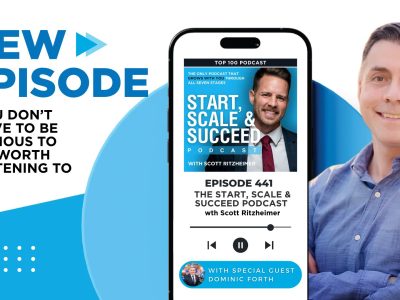
In this empowering episode, Dominic Forth, CEO of Thought Leaders America, shares how early-stage founders can build credible visibility and turn media into real revenue. If you feel stuck because no one trusts you enough to buy yet, you won’t want to miss it.
You will discover:
- Why your revenue problem is often a trust problem, not just a lead problem
- How to use podcasts to gain visibility and real-time feedback without waiting for perfection
- What to do with media appearances so they become revenue-generating assets
Did you know there are different types of founders? Do you know what type you are? Did you know that there are different strategies for each type of founder? Where many founders get it wrong is they choose the wrong strategies simply because fail to recognize these differences.
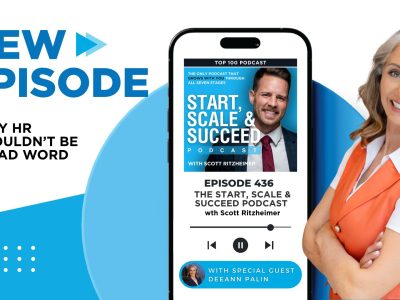
In this practical episode, DeeAnn Palin, Founder and CEO of ONPOINT Business Solutions, shares why treating HR as pure overhead keeps founders stuck and how to turn people strategy into a real growth lever. If payroll feels like your biggest expense yet you’re still leaking talent and time, you won’t want to miss it.
You will discover:
- Why treating HR as pure expense creates hidden leakage and blocks the next growth stage
- How to know when fractional strategic HR support becomes cheaper than doing nothing
- What the real math of turnover and misallocated rewards is costing you every year
Where does growth come from, incremental gains, or quantum leaps? There are so many articles written on this question, and they come to virtually every single conclusion. I'd like to take a moment to try to explain why the answer is "YES" and what that means for your business.
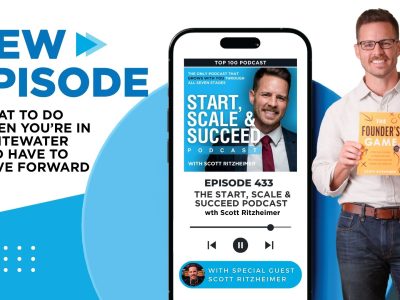
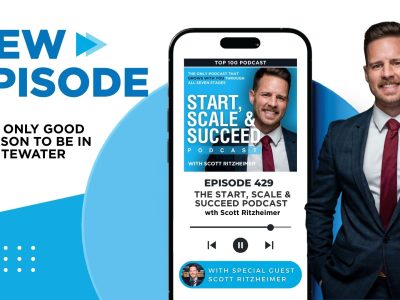
In this strategic episode, Scott Ritzheimer, Founder of Scale Architects, shares how to push forward into Predictable Success even when your team is imbalanced and you’re already in Whitewater. If external pressures force you to scale despite missing the ideal style mix, you won’t want to miss it.
You will discover:
- Why some organizations must drive to Predictable Success even with an imbalanced team
- How to protect the operator voice using the designated driver strategy
- What five systems you must build while still freeing operators to execute
You will discover:
- Why some organizations must drive to Predictable Success even with an imbalanced team
- How to protect the operator voice using the designated driver strategy
- What five systems you must build while still freeing operators to execute
You will discover:
- Why stepping into management is a career change, not a promotion
- How to create clarity around expectations for new managers
- What the Four Ps of Leadership framework reveals about where clarity is missing
The #1 reason founders (who want to take their business into Predictable Success) never make it there has nothing to do with the value of their product, the size of their market, or their capacity as a leader. In this article I’ll show you exactly what it is.
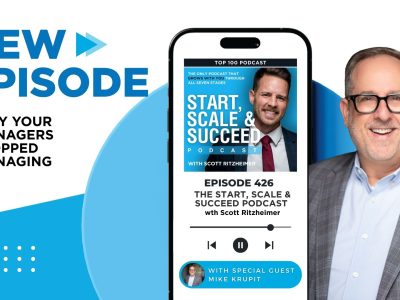
In this actionable episode, Alícia Rius, Founder of Hive - Leadership & Team Coaching, shares why promoting your best individual contributor rarely creates a great manager. If you're in stage 4 frustrated that your promoted leaders are struggling and your team isn't performing as expected, you won't want to miss it.
You will discover:
- Why stepping into management is a career change, not a promotion
- How to create clarity around expectations for new managers
- What the Four Ps of Leadership framework reveals about where clarity is missing
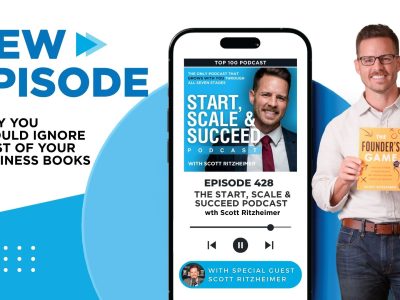
In this liberating episode, Scott Ritzheimer, Founder of Scale Architects, shares why most business books overwhelm founders and how to stop applying the wrong advice at the wrong time. If you feel buried in “shoulds,” frustrated when strategies fail, or unsure which books actually apply to you right now, you won’t want to miss it.
You will discover:
- Why business books written for one stage create confusion when read by founders in every stage
- How to identify the level a book was written for and match it to where you are today
- What to do when the first chapters are strong but the rest is just filler
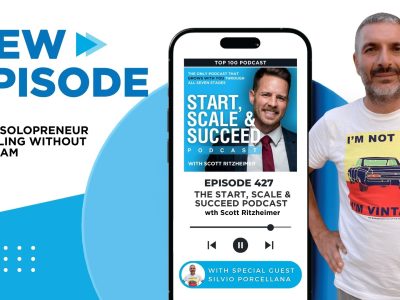
In this clarifying episode, Silvio Porcellana, Founder of SilvioPorcellana.com, shares how to escape the solopreneur trap of hiring your way out of overwhelm and instead build systems that protect your capacity. If you’re drowning in tasks, frustrated by people, and doing less of the work you love, you won’t want to miss it.
You will discover:
- Why thinking in systems instead of constantly putting out fires is the real path forward
- How to treat yourself as a resource and build systems around your actual strengths
- What to prioritize so the system grows while you keep doing the work you enjoy
In this actionable episode, Alícia Rius, Founder of Hive - Leadership & Team Coaching, shares why promoting your best individual contributor rarely creates a great manager. If you're in stage 4 frustrated that your promoted leaders are struggling and your team isn't performing as expected, you won't want to miss it.
You will discover:
- Why stepping into management is a career change, not a promotion
- How to create clarity around expectations for new managers
- What the Four Ps of Leadership framework reveals about where clarity is missing